

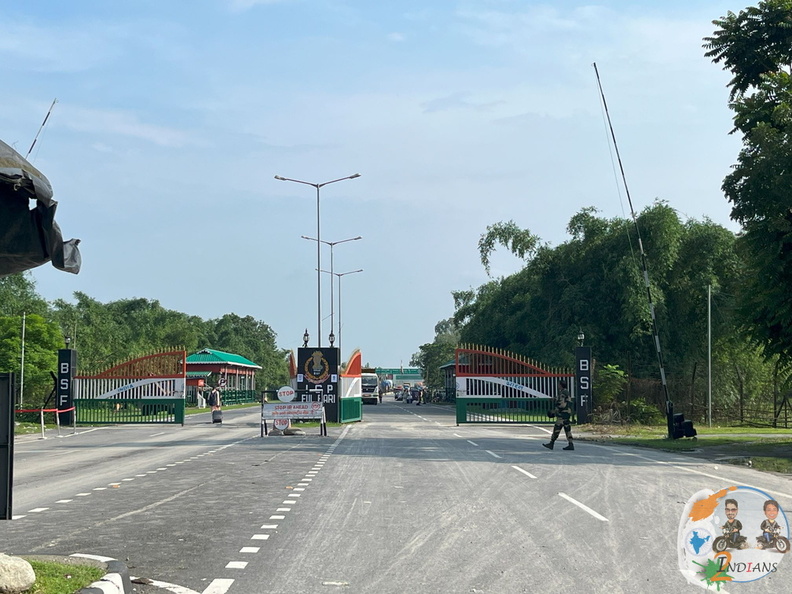
The Flag Lowering Ceremony by the Border Security Force (BSF) is a daily event held at the Fulbari border between India and Bangladesh. It is a military practice that showcases the lowering of the national flags of both countries with great pomp and ceremony. Here are some key points about the event:
- Location: The ceremony takes place at the Fulbari border, which is the only road border crossing between India and Bangladesh, located between the cities of Siliguri in India and Panchagarh in Bangladesh.
- Participants: The ceremony is performed by soldiers from the Border Security Force (BSF) of India and the Bangladesh Rangers. Both sides coordinate the event to reflect the spirit of cooperation and rivalry between the two nations.
- Timing: The ceremony takes place every evening just before sunset (4PM). The exact timing may vary depending on the season and the time of sunset.
- Activities: The ceremony includes a series of choreographed movements, marching, and patriotic displays. The soldiers perform high kicks, fast-paced drills, and aggressive posturing. The event culminates with the simultaneous lowering of the national flags of both countries.
- Audience: The event attracts large crowds on both sides of the border, with spectators often cheering and chanting patriotic slogans. It is a popular attraction for tourists and locals alike.
- Significance: The ceremony symbolizes the rivalry as well as the cooperation between India and Bangladesh. It is a display of strength, discipline, and national pride for both countries.
History of The Flag Lowering Ceremony at the Wagah-Attari border
The Flag Lowering Ceremony at the Wagah-Attari border has a rich history and several distinct elements that make it a unique and significant event. Here are some detailed aspects:
History
- Origins: The ceremony dates back to 1959 and was established as a daily military practice to symbolize the rivalry and cooperation between India and Pakistan. It has evolved into a highly choreographed event over the decades.
- Post-Independence: The ceremony began after the partition of India in 1947 when India and Pakistan became separate nations. The border crossing at Wagah became a critical point of entry and exit between the two countries.
Ceremony Details
- Opening: The ceremony starts with the playing of patriotic songs and the gathering of crowds on both sides of the border.
- Parade: Soldiers from both the BSF (India) and the Pakistan Rangers march towards the gates. Their movements are synchronized, and the parade is characterized by high steps and vigorous salutes.
- Drills: The soldiers perform a series of aggressive and elaborate drills, including powerful stomping and quick turns, meant to display their strength and discipline.
- Flag Lowering: The climax of the ceremony is the simultaneous lowering of the national flags. Both flags are lowered at exactly the same speed and timing, ensuring they reach the bottom of the flagpoles simultaneously.
- Handshake: After the flags are lowered and folded with respect, soldiers from both sides shake hands and close the gates for the night.
Significance
- Patriotism: The ceremony is a powerful display of national pride and unity. It invokes strong feelings of patriotism among the spectators.
- Symbolism: The event symbolizes both the historic rivalry and the ongoing cooperation between the two nations. It is a reflection of the complex relationship between India and Pakistan.
- Tourism: The ceremony is a major attraction for tourists. People from around the world come to witness the event, which has become a symbol of the border’s cultural significance.
- Diplomacy: The ceremony is a daily reminder of the need for peaceful coexistence and mutual respect despite the historical tensions between the two countries.
Other Details
- Dress Code: Soldiers wear ceremonial uniforms that are distinct to their respective forces. The uniforms include traditional elements and are designed to be visually impressive.
- Crowd Interaction: Spectators often participate by cheering, singing national anthems, and waving flags. The energy from the crowd adds to the vibrant atmosphere of the ceremony.
- Media Coverage: The ceremony is often covered by media from both countries and internationally, highlighting its significance and widespread interest.
Overall, the Flag Lowering Ceremony at the Wagah-Attari border is a powerful symbol of the complex relationship between India and Pakistan, blending elements of rivalry, respect, and cooperation in a daily ritual that captivates audiences on both sides of the border and around the world.